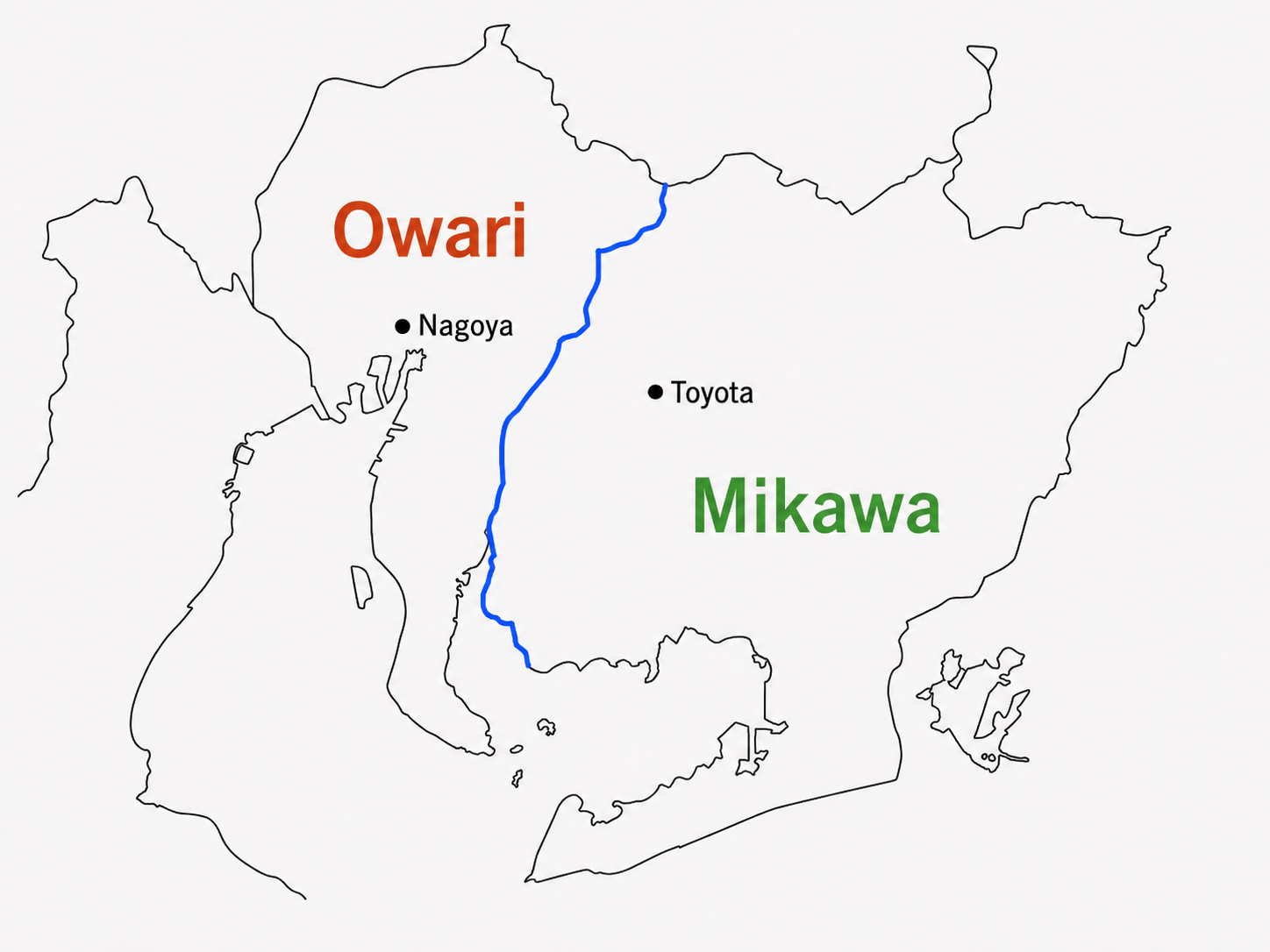
How Koromo Became Toyota City in 195
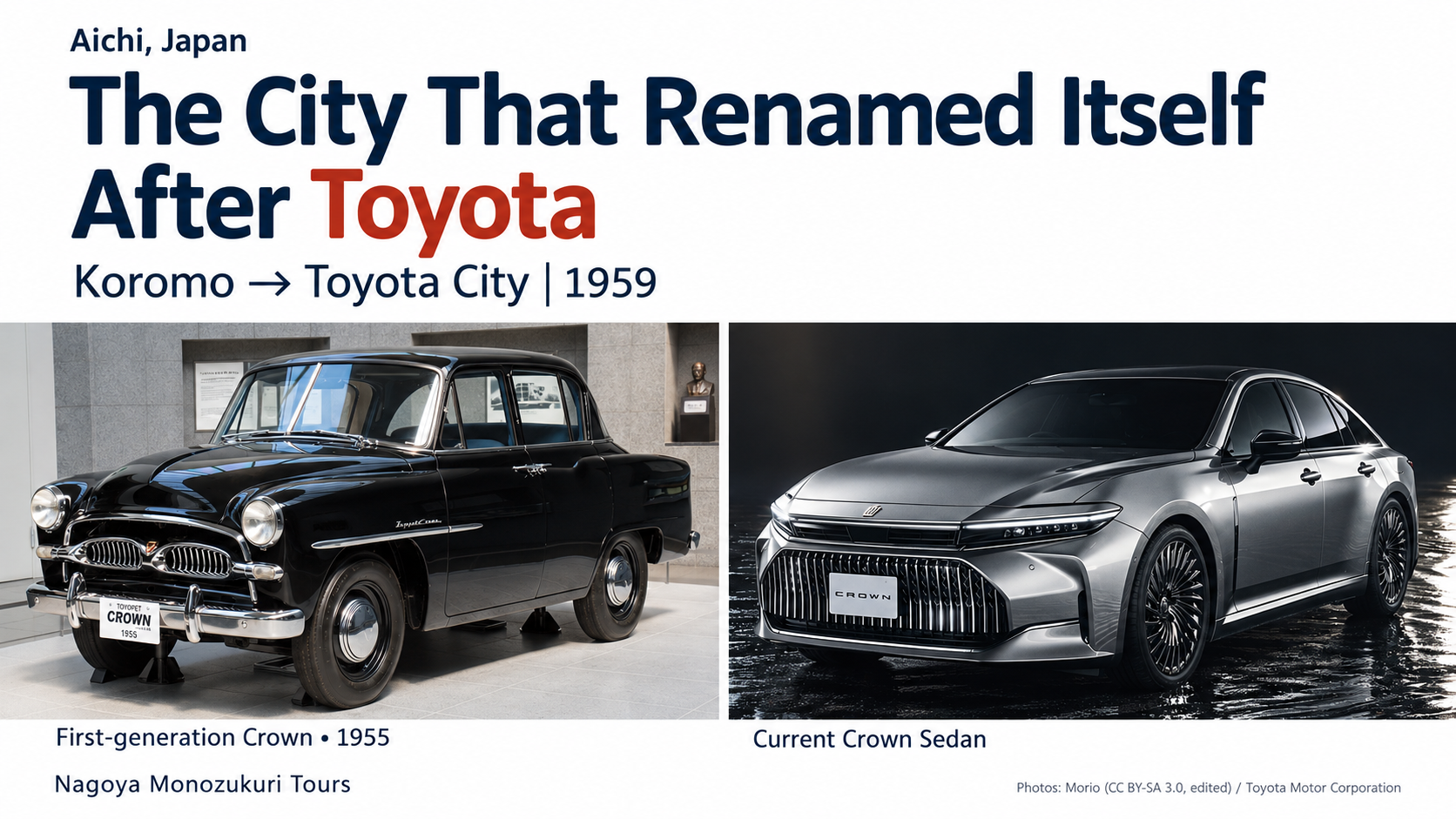
In 1959, a Japanese city changed its name to Toyota.
Unti

Discover a ceramic story that links Japan’s famous toilets, a visit to Noritake Garden, and the automotive world.
If a TOTO toilet has caught your attention during a visit to Japan, here is another reason to remember the name.
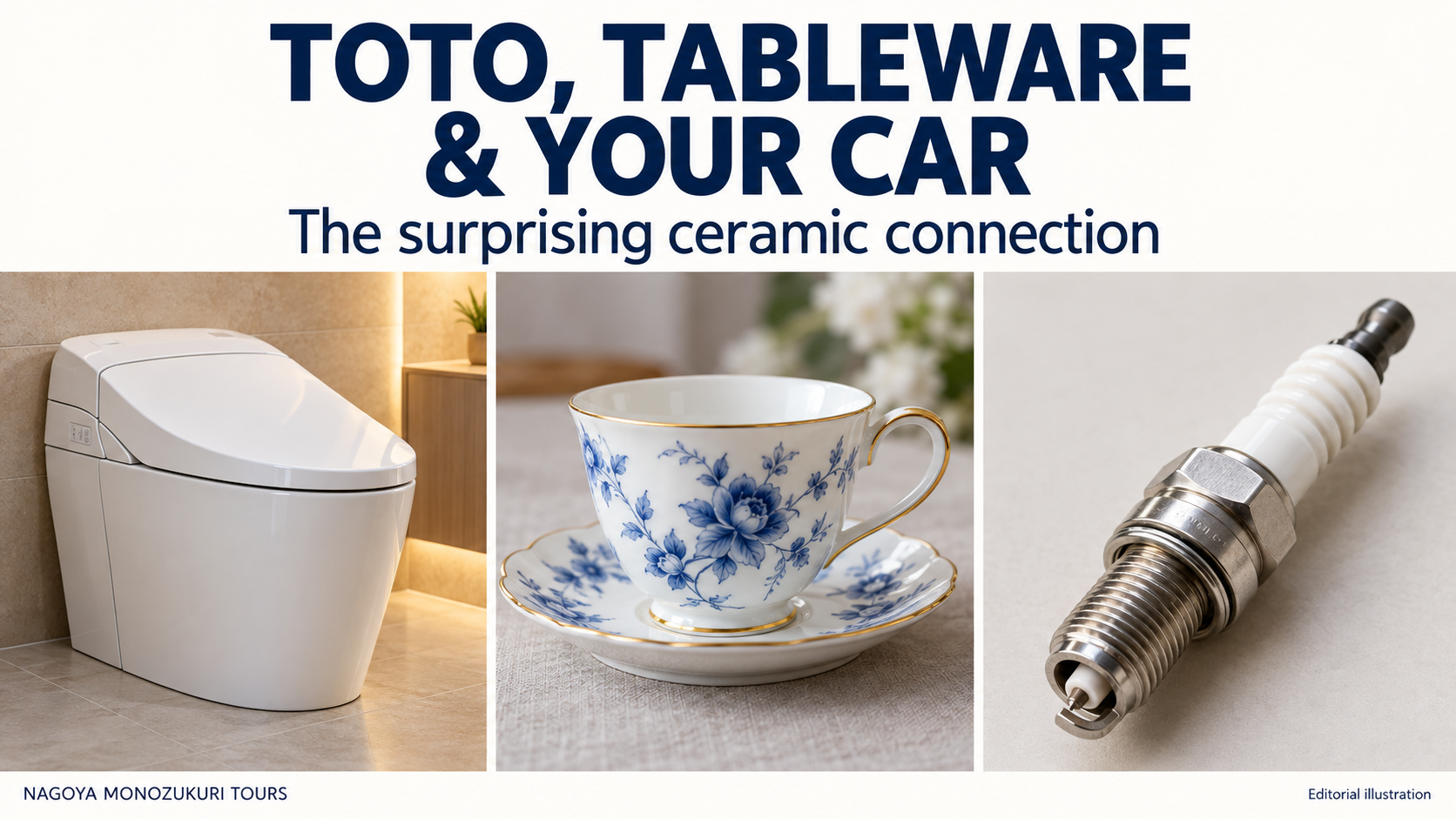
TOTO toilets, Noritake tableware and NGK spark plugs share historical roots in the Morimura group. A bathroom fixture, an elegant dinner plate and a component inside a car may seem an unlikely combination. Their connection opens a window onto the ceramic heritage of Nagoya and the surrounding region.
Long before Aichi became associated with automobiles, its kilns were producing objects for everyday life.
Seto and Tokoname, both in Aichi Prefecture, belong to Japan’s Six Ancient Kilns: pottery-making centers whose production has continued from medieval times to the present. Seto’s name even gave Japan the word setomono, a familiar term for pottery. Tokoname is known for its reddish-brown teapots, alongside a much longer history of making jars and other useful objects.
These places give visitors a sense of how deeply ceramics are woven into the region’s history. Across generations, people learned to prepare materials, shape them, control the fire and adapt their products to changing needs.
The Morimura story adds overseas trade to that regional picture.
Founded in 1876, Morimura Gumi developed a business exporting Japanese goods to the United States. Ceramics became an important part of that trade. The challenge of producing fine white tableware for overseas customers led to research and manufacturing in Nagoya, and the establishment of Nippon Toki, the predecessor of Noritake, in 1904.
As its ceramic expertise developed, different businesses took shape. Its sanitary-ware division became TOTO. Its electrical-insulator division became a separate company, Nippon Gaishi. A later spin-off from Nippon Gaishi became the company behind NGK spark plugs.
The possibilities extended far beyond the dining table. Ceramic knowledge could serve the home, the electricity network and the engine.
Different applications call for different materials and properties. What makes the story interesting is how skills in preparing, shaping and firing materials opened up new uses—and new businesses.
In Nagoya, Noritake Garden offers an inviting way to explore part of this history. It occupies the birthplace of Noritake, where the company began its tableware manufacturing journey.
At the Craft Center, you can see how bone china is made, from forming the body to decorating its surface. Watching the work gives familiar objects a new significance: the curve of a handle, the finish of a plate and the detail of a painted design all reflect decisions and skill.
The Noritake Museum introduces earlier generations of that work through Old Noritake pieces, tableware and design drawings.
You can also try decorating a plate or mug yourself. The painting experience turns observation into participation, whether you arrive with an elaborate design in mind or simply want to enjoy working with color. Finished pieces are fired and shipped later; overseas delivery is available for an additional charge.
Then browse Noritake Square Nagoya, the on-site shop. Alongside its main collections, an outlet corner offers discontinued items, special selections and patterns made for overseas markets. Choosing a cup or plate becomes a way to take a small part of the story home.
For visitors working in the automotive industry, there is another familiar object to consider: the spark plug.
Its white ceramic section has a practical purpose. It electrically insulates the central conductor while enduring demanding temperatures. Together with the metal components, it supports the controlled spark that ignites the air-fuel mixture in a gasoline engine.
Noritake itself also connects directly to automotive manufacturing. The company developed industrial grinding wheels from technology used to finish porcelain, and its grinding and polishing tools serve industries including automotive production.
That gives a visit to Noritake Garden an additional dimension. The techniques behind an object on the dining table can offer a starting point for understanding the less visible processes behind a vehicle.
In Nagoya, a story that begins with a toilet and a teacup can take you all the way to the car.
Explore more local manufacturing stories with Nagoya Monozukuri Tours.