Discover a ceramic story that links Japan’s famous toilets, a visit to Noritake Garden, and the auto


Toyota’s first passenger-car prototype was built in Kariya.
That small detail helps explain a much bigger question: why are Toyota Industries, DENSO and several other major Toyota Group companies headquartered here?
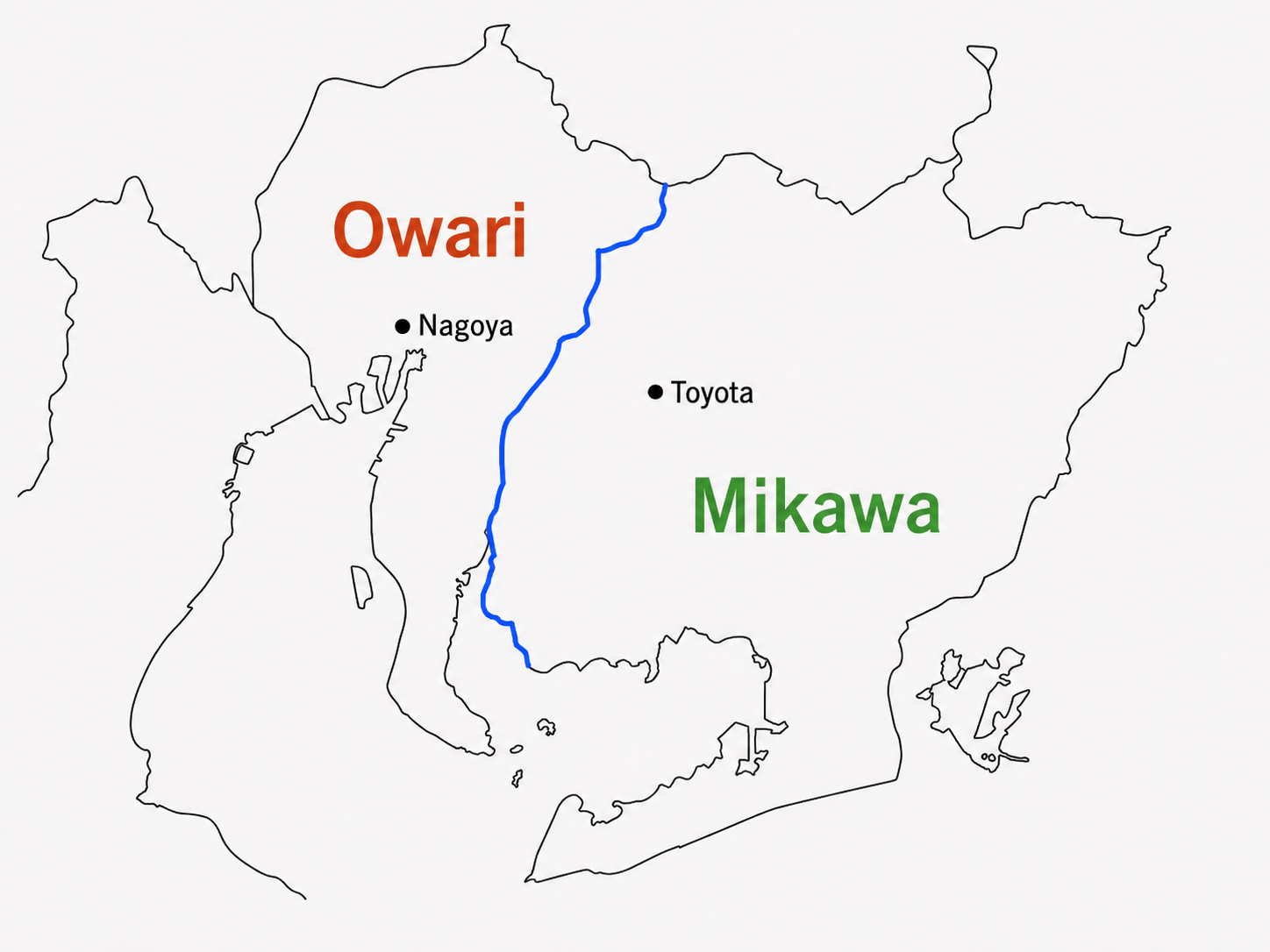
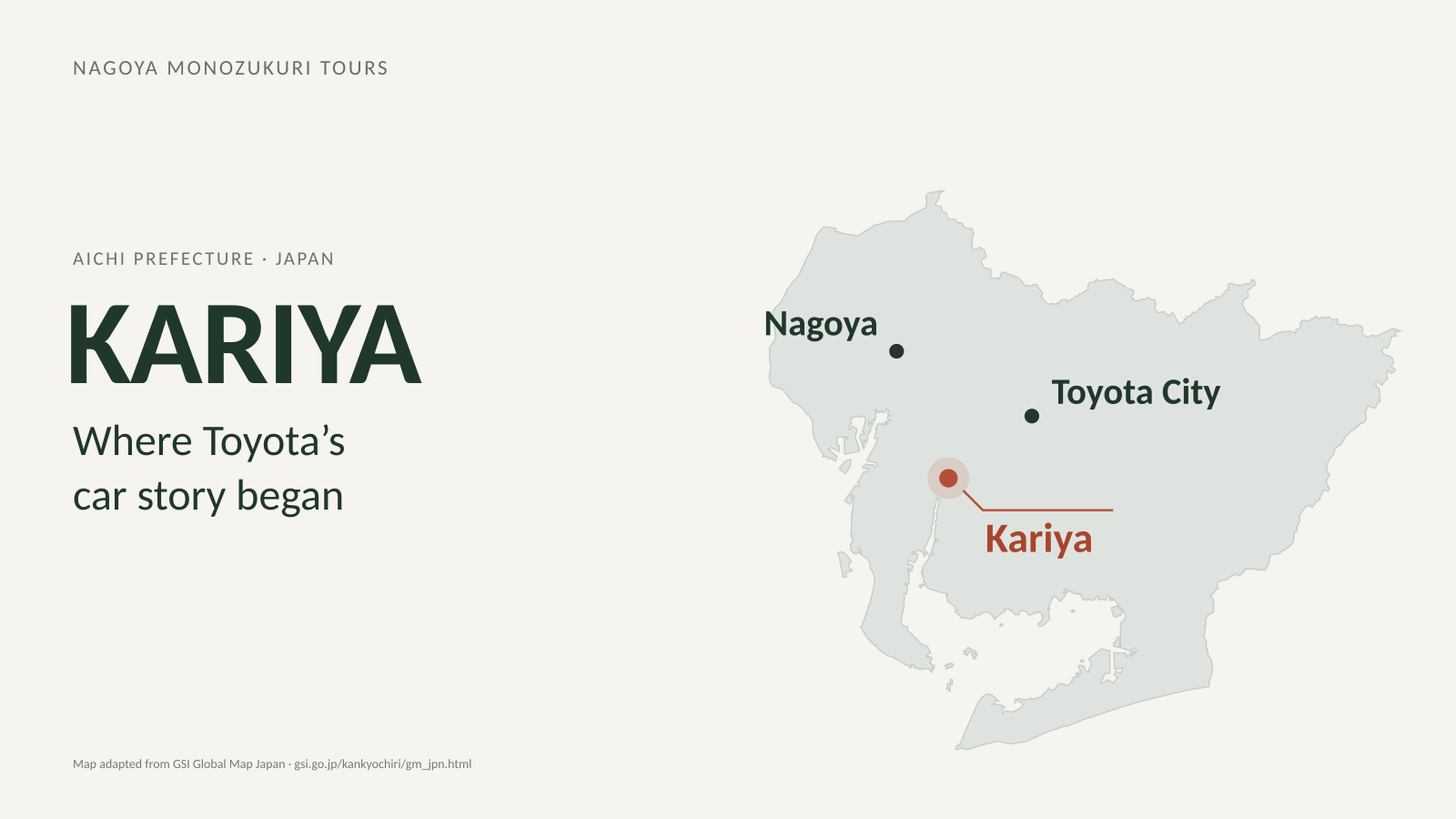
Look at a map of Aichi Prefecture. Nagoya is the region’s main city. Toyota City lies to its east. Kariya sits southeast of Nagoya and southwest of central Toyota City. To understand how these places became connected through manufacturing, Kariya is an important starting point.
The story begins with Toyoda Automatic Loom Works, founded in 1926 to manufacture the automatic looms developed by Sakichi Toyoda. Today, that company is known as Toyota Industries.
Its business was making machines that wove cloth. Car manufacturing grew out of this existing engineering business.
In 1933, an automobile division was established within the company in Kariya. Sakichi’s son, Kiichiro Toyoda, led the move into cars. A prototype plant followed, and in 1935 the first A1 passenger-car prototype was completed.
The work involved much more than designing a vehicle. The team had to develop materials, cast engine components and shape body panels. The official history of the prototype plant describes failed cylinder-block castings and panels hammered into shape by hand.
Toyota’s early cars emerged from this process of making, testing and trying again.
Toyota Motor became a separate company in 1937. The following year, its main vehicle production moved to the new Koromo Plant, in what is now Toyota City.
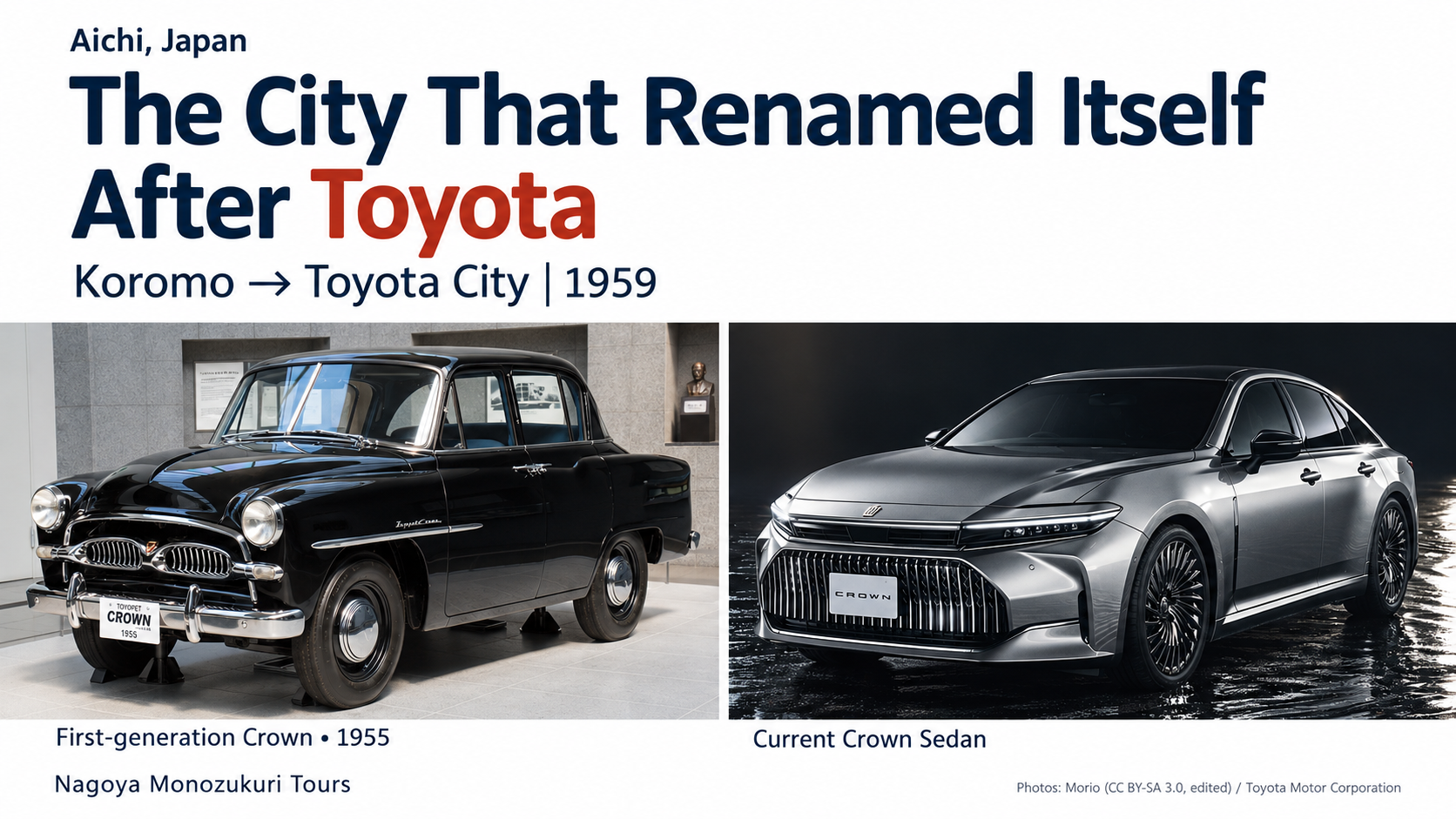
Koromo would later rename itself Toyota in 1959—the story covered in our earlier article.
This gives visitors a useful way to read the local map: Kariya was where Toyota’s early carmaking took shape; Koromo became the base for a much larger vehicle manufacturing operation.
Kariya continued to play a central role as the business expanded.
When main vehicle production moved to Koromo, the electrical-components business stayed in Kariya.
DENSO’s own history offers an interesting explanation. Kiichiro believed that automotive electrical components required specialist research. Keeping that work in Kariya would allow the team to build its expertise.
In 1949, Toyota Motor’s electrical-components operation, which also included radiators, became an independent company: Nippondenso, today’s DENSO.
This history helps explain two of Kariya’s best-known headquarters. Toyota Industries is the company from which Toyota’s automotive business emerged. DENSO grew from the specialist components business that developed here.
AISIN is also headquartered in Kariya, although it has its own history of predecessor companies and mergers. Each company has a different story, but together they show how deeply the city is connected to the automotive industry.
For an industrial tourism guide, these headquarters make the history visible on today’s map.
Part of that early story can still be explored at the Toyota founding-era prototype plant—officially named “The prototype plant at the establishment of Toyota.”
The preserved buildings stand within the grounds of Aichi Steel’s Kariya Plant, on the site where the early automotive work took place. The visit focuses on the prototype plant and the development of Toyota’s first vehicles.
A few practical points help with planning:
- Advance booking is required; the guided visit is free and lasts about 40 minutes.
- The facility is closed on weekends, public holidays and specified holiday periods.
- The facility’s guided tours are in Japanese only, so overseas visitors should discuss language support in advance.
It is approximately a 15-minute walk from Kariya Station.
Check the official visitor information and reservation page before making plans.
For visitors interested in cars, Kariya adds an earlier chapter to the story of Toyota City. It connects the loom business, the first automotive prototypes and the specialist companies that became part of a global industry.
As an industrial tourism guide, this is the kind of connection I want to share: how the places on a map help explain the companies people know around the world.
Toyota City tells a story of growth. Kariya takes us back to Toyota’s first attempts to build a car.
Explore more local manufacturing stories with Nagoya Monozukuri Tours.